Discover why Jellycats cost $50-$150+! From premium materials to collector hype, we break down the real reasons behind the price of these ultra-soft plushies. W
Discover why Jellycats cost $50-$150+! From premium materials to collector hype, we break down the real reasons behind the price of these ultra-soft plushies.
If you’ve ever fallen down the TikTok rabbit hole of plushie hauls, you’ve seen them: those impossibly soft, impossibly cute stuffed animals with the signature “Jellycat” tag. They’re the plushies that make adults gasp, kids clutch them tighter, and collectors spend hundreds on a single “retired” bunny. But when you look at the price tag? Ouch. A medium-sized Jellycat can cost $50, $80, even $150 for a rare one. And you can’t help but wonder: Why are Jellycats so expensive?
Is it just hype? Is it the fabric that feels like a cloud? Or is there something deeper going on behind the scenes? Spoiler: it’s a mix of all three, plus a whole lot of heart. Let’s break it down — from the factory floor to your cozy shelf — so you can understand the real story behind every squishy, adorable, wallet-emptying Jellycat.
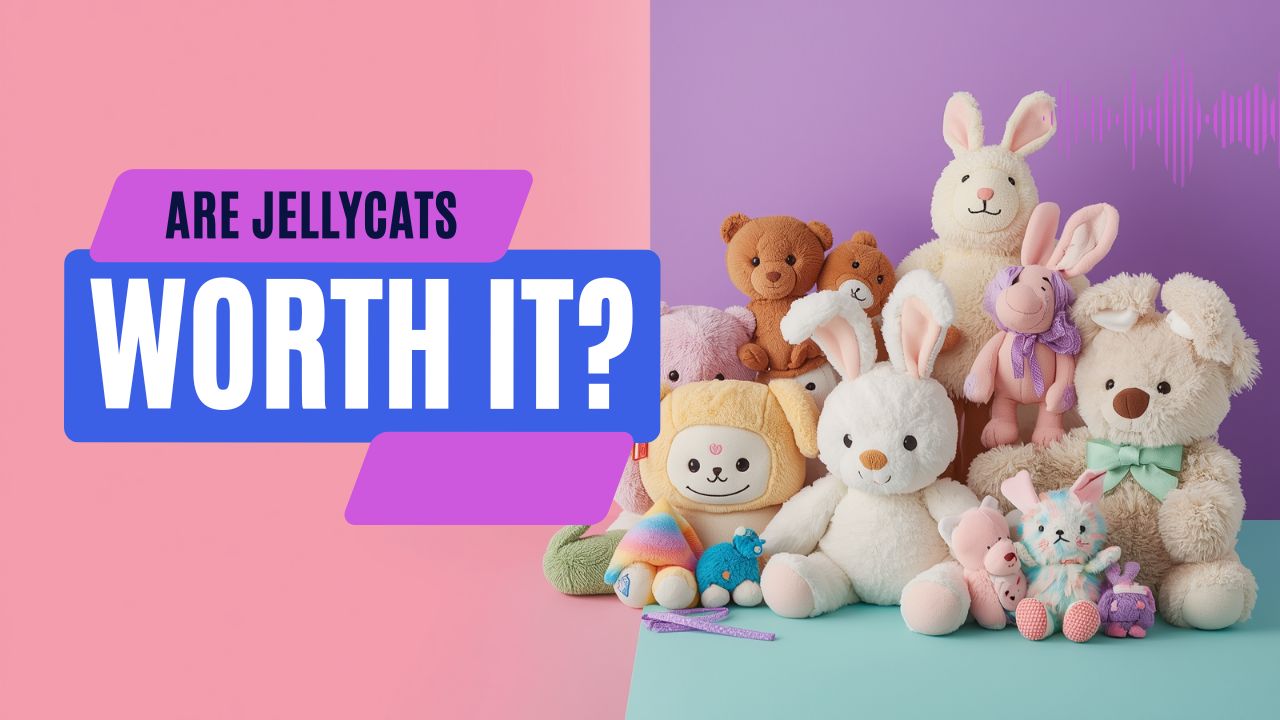
Jellycats are expensive because of a combination of premium materials, ethical manufacturing, limited production runs, strong brand demand, and resale market hype. Unlike mass-produced plushies, each Jellycat is crafted with high-quality, safety-tested fabrics and hand-finished details. The company intentionally limits supply to maintain exclusivity, which drives up both retail and secondary market prices. In short: you’re paying for quality, rarity, and a cultural phenomenon.
Let’s start with the obvious: a plush toy that costs as much as a dinner out better be special. And Jellycats are. But how special? Here’s what you’re really paying for.
Pick up a Jellycat. Go ahead. Squeeze it. That feeling? It’s not an accident. Jellycat uses high-grade synthetic furs that are exceptionally soft — often multi-layered to achieve that “melt in your hands” texture. The stuffing is dense but light, designed to hold shape without going lumpy. And the beans inside the bottom? They’re weighted for a satisfying, grounded hug that cheaper plushies can’t replicate.
All materials are rigorously tested for safety (even for infants), which adds to production costs. No cheap polyester fill. No scratchy fur. Every stitch is chosen for longevity and comfort.
This is a big one. Jellycat toys are made in China and other Asian countries, but they’re not churned out in sweatshop conditions. Multiple sources, including a detailed breakdown on TwistedSifter, explain that Jellycat’s price reflects real costs of labor — fair wages, safe working conditions, and strict quality control. That means each toy goes through multiple inspections before it gets the tag. Compare that to a $5 stuffed animal from a discount store, where corners are cut everywhere.
The hayllo.co blog points out that Jellycat also invests in “hand-finishing” for details like embroidered eyes and noses, which requires skilled workers. Automation isn’t enough for that perfect expression.
Jellycat doesn’t just happen to be hard to find. They intentionally retire designs after a few months or years, creating a natural scarcity. That means if you miss the “Smudge Bunny” drop, you might never see it at retail price again. This fuels a frantic collector culture, where secondary market prices skyrocket. A rare retired Jellycat can sell for 5x retail.
This isn’t an accident — it’s a clever branding strategy that mimics the luxury goods model. But it also means that even current retail prices feel high because they’re competing with a perception of future value.
It’s the question everyone asks when they see a $70 plushie next to a $20 one. Let’s compare.
Most plush toys are “fast fashion” — cheaply made, sold in bulk, and designed to be disposable. They use thin fabrics, loose stitching, and plastic parts that can break. Jellycat, on the other hand, is built to last for years. Owners report passing down Bashful Bunnies to their own children. That durability comes from better materials and more careful construction.
Let’s be honest: part of the price is the brand. Jellycat has cultivated a cult following. People want the tag, the aesthetic, the status. That’s not a bad thing — it’s just a fact of consumer psychology. When something becomes a symbol of softness, joy, and nostalgia, people are willing to pay more for it. And Jellycat knows it.
But it’s not just hype. The Distractify article notes that Jellycat has effectively replaced Beanie Babies as the collector plush of this generation — with the added twist of being genuinely loved rather than purely speculative.
You’ve seen them: the smiling avocado, the happy sunnyside egg, the little slice of toast. These “Amuseable” food items are some of Jellycat’s most iconic (and expensive) lines. Why?
A simple bunny is a basically four limbs and a head. A croissant? That requires sculpting, multiple fabric pieces, and careful stitching to get that flaky curl right. Each Amuseable involves more pattern pieces, more hand assembly, and more quality checks. They’re essentially miniature pieces of soft sculpture.
Amuseable items are made for viral content. They’re quirky, photogenic, and instantly recognizable. People buy them for photo shoots, desk decor, and TikTok unboxings. That demand pushes prices up. Plus, they’re often released in limited runs, so retailers can charge a premium.
Before you decide whether the price is worth it, let’s weigh it fairly.
Jellycats aren’t just toys — they’re a cultural moment. TikTok has exploded with “Jellycat collections” that rival sneaker walls. Pinterest boards are filled with cozy, aesthetic photos of Bashful Bunnies next to coffee mugs and autumn leaves. The hashtag #jellycat has billions of views.
We’re living in stressful times. Plushies offer a safe, tactile comfort that screens can’t provide. Jellycats, with their gentle expressions and weighted bodies, feel almost alive. Many adults buy them as “emotional support plushies” — a soft friend to hug after a hard day. That emotional need makes the price feel justifiable.
Jellycat fits perfectly into the Instagrammable world of cozy interiors, soft lighting, and vintage vibes. They’re not just toys; they’re decor. People stage them for photos, take them on trips, and incorporate them into wardrobes as bag charms or scarf accessories. This aesthetic versatility drives demand across demographics.
If you’re into the world of expensive, rare plushies, you’ve probably heard of Labubu—another viral phenomenon. The same emotional and scarcity-driven forces apply. In fact, the 12 Reasons Why Is Labubu So Expensive article explains similar dynamics: limited releases, high resale, and cult-like fandom. It’s all part of a bigger trend: the collectible plush economy where owning a rare toy is a status symbol.
We’ve covered this, but the short version: premium materials, ethical manufacturing, limited production, high demand, and brand cachet. Visit the wikiHow forum discussion to see real buyers debating the same question.
Surprisingly, some people do buy Jellycats for their pets. But Jellycat toys are not designed specifically for cats. They can be safe if the cat doesn’t chew aggressively, but beware of small parts like embroidered eyes that could come loose. Always supervise. That said, the soft fur is very tempting for a feline snuggle buddy.
Because they’re positioned as premium products. Other plushies are often mass-produced with cheaper materials and fewer safety tests. Jellycat’s manufacturing costs are higher, and their marketing strategy is to stay exclusive.
Due to complex designs, higher labor requirements, and immense popularity on social media. They’re also released in smaller quantities.
Check out The Complete Guide for 2026 for a deep dive into future trends, and also the my money cottage article for a personal finance perspective on whether they’re worth it.
Here’s the honest truth: if you’re looking for a cheap toy to toss around, Jellycat probably isn’t for you. But if you want something that feels special — something that brings you a quiet joy every time you see it, something that triggers memories of childhood comfort, something that holds its value and maybe even becomes a family heirloom — then yes, the price is worth it.
Jellycats aren’t just stuffed animals. They’re little emotional anchors in a whirlwind world. They’re the avocado you bring to your desk for a smile. The bashful bunny you hug after a breakup. The croissant that makes your bookshelf look like a cozy café.
So next time someone asks, “Why are Jellycats so expensive?” you can smile, hold yours a little tighter, and say, “Because some things are worth paying for.”
Tags: jellycats, expensive, full, breakdown, jellycat